


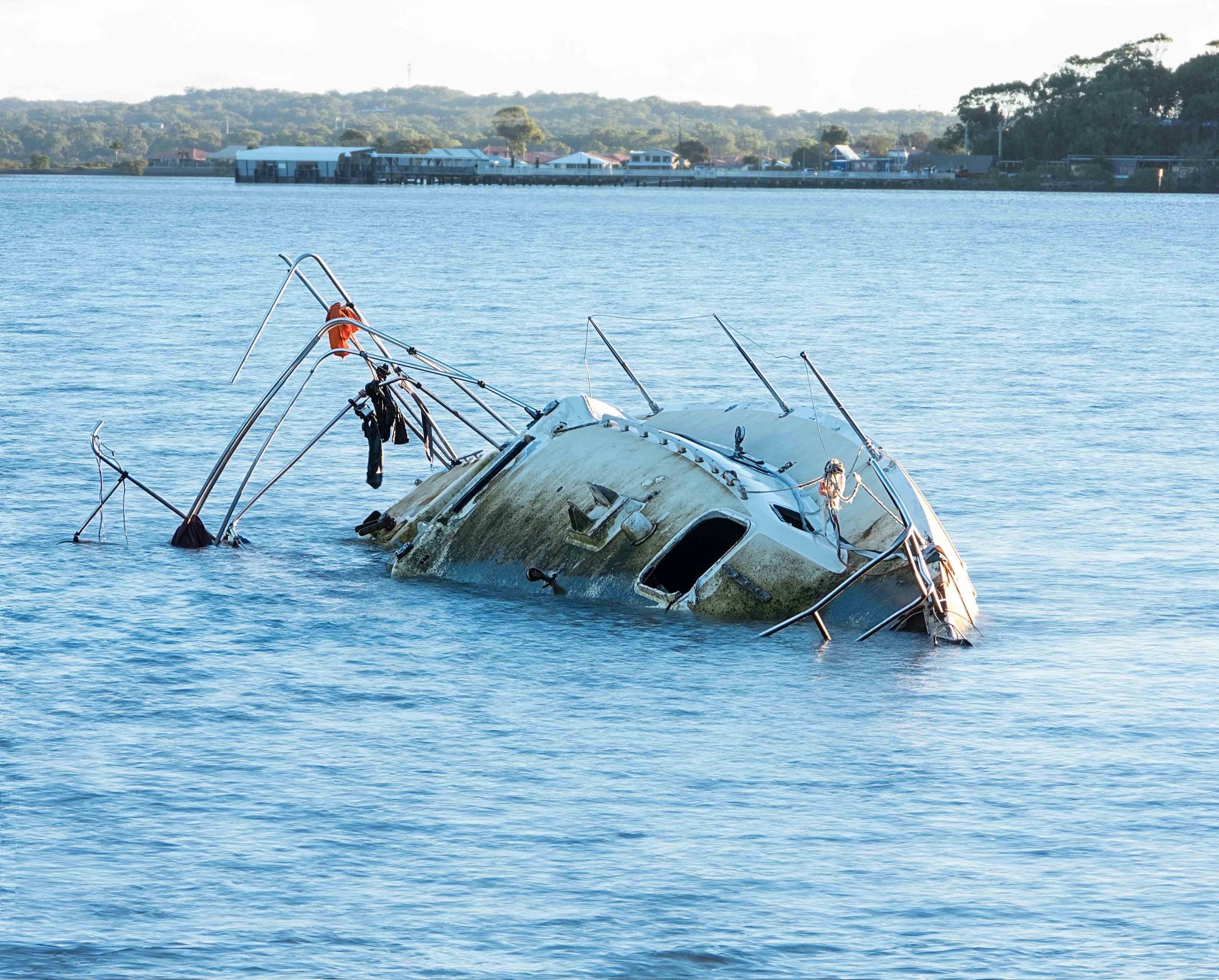
Maritime navigation, whether recreational or professional, involves inherent risks, the collision of which remains one of the most feared. Each year, hundreds of incidents are recorded in French and European waters, causing significant material damage and sometimes human losses. Managing a collision cannot be improvised and requires a thorough knowledge of emergency procedures, legal obligations and careful crew preparation. Beyond simply reacting to the accident, understanding the frequent causes of these events makes it possible to adopt safer and responsible navigation. The maritime authorities also insist on the importance of continuing training and scrupulous compliance with navigation rules. In this context, having modern surveillance and warning tools, such as the Oria Marine IoT box, which allows real-time monitoring of your boat, is a valuable asset for safety. This article takes you through the essential steps to take in the event of a collision and the best practices to prevent such incidents.
The most common causes of collisions
Understanding the origins of marine collisions is the first step towards safer navigation. Statistics show that the majority of accidents are the result of a combination of factors rather than a single cause. The analysis of these incidents makes it possible to identify the essential points of vigilance and to adapt one's behavior accordingly.
Human error and lack of sleep
Human error remains the main cause of collisions at sea, accounting for nearly 80 percent of marine accidents. The lack of vigilance occurs in various forms ranging from simple temporary inattention to the total absence of surveillance of the horizon. Many boaters underestimate the importance of constant vigilance, especially during long sailing where fatigue gradually sets in. Excessive use of electronic equipment, while useful, can also distract the navigator's attention from directly observing his environment. Overconfidence in automatic systems, like Autopilot, sometimes creates a false sense of security that reduces alertness. It is essential to maintain a regular rotation of the people in charge of the watch and to limit the shifts to reasonable lengths of time to maintain everyone's concentration.
Adverse weather conditions
Harsh weather conditions greatly increase the risk of collisions by reducing visibility and complicating maneuvers. Fog is one of the most dangerous factors, making navigation a perilous exercise where detecting other ships becomes extremely difficult. Heavy rain, snow, or spray also reduce visual range and make identifying navigation lights more complex. The significant swell disrupts the stability of the boat and complicates the execution of precise evasive maneuvers. In these situations, the speed must be adapted to the conditions encountered, in accordance with international rules to prevent collisions at sea. The navigator must also intensify his surveillance and use all the technical means available, in particular radar and VHF, to detect other boats and report his presence. Prudence sometimes requires you to postpone an outing or seek shelter when conditions deteriorate significantly.
Technical failure or loss of maneuverability
Mechanical failures and technical failures can turn peaceful navigation into a critical situation. The loss of propulsion in the middle of a traffic zone immediately exposes the ship to the risk of collision, especially if it drifts towards busy shipping routes. Rudder problems, whether mechanical or hydraulic, deprive the helmsman of the ability to steer the boat and perform avoidance maneuvers. Electrical failures affect all navigation and communication systems, making it more difficult to detect other vessels and preventing distress calls. Regular and meticulous maintenance of propulsion, steering, and electrical systems is the best prevention against these incidents. Pre-navigating critical equipment and maintaining an up-to-date maintenance log make it possible to identify potential problems before they occur at sea. Having redundant systems for essential functions, such as an emergency propulsion or an auxiliary battery, offers significant additional security.
Navigation in areas with high traffic density
Areas with a high concentration of ships, such as port access channels, traffic separation devices or narrow passages, mechanically increase the risk of collision. The diversity of boats present, from small sailing boats to cargo ships of several hundred meters long, complicates the management of maritime traffic. Each type of ship has distinct maneuverability characteristics, specific blind spots, and different priorities depending on the steering rules. Port areas also concentrate the movements of ships with reduced maneuvering capacities, such as boats in tow or vessels with limited maneuvering capacity doing work. In these environments, vigilance must be maximum and navigation must be conducted with increased foresight. Strict compliance with traffic separation schemes and recommended roads avoids conflicting trajectories. Proactive communication on the VHF also makes it possible to clarify navigation intentions and to coordinate maneuvers with other users of these sensitive areas.
Immediate actions after a collision
The first minutes following a collision are critical for the safety of the crew and the safety of the ship. The speed and relevance of the actions taken can make the difference between a controlled incident and a catastrophic situation. It is necessary to act methodically while maintaining calm in order to properly assess the situation and make the right decisions.
Ensuring crew safety
The top priority after a shock is to check the condition of each crew member and provide first aid if necessary. The captain should immediately roll call to ensure that no one has gone overboard or is injured in an isolated area of the boat. Those present on the bridge at the time of impact are particularly likely to have been thrown or to have suffered trauma. It should be checked for the absence of fractures, major wounds, or head injuries requiring urgent medical attention. In the event of a serious injury, initiating an emergency medical procedure with sea rescue services becomes a priority. The on-board medical kit must be immediately accessible and the crew trained in first aid procedures. If people have fallen into the water, triggering the man-overboard procedure takes precedence over any other consideration. Personal safety always comes before the preservation of equipment or administrative considerations related to the accident.
Verify the extent of damage to the shell and systems
Once crew safety is ensured, the rapid but comprehensive assessment of property damage becomes the next priority. The inspection should start with the hull, methodically looking for impact marks, deformations or breaches that could cause a waterway. The compartments below the waterline require special attention, monitoring the appearance of water in the bottoms and checking the proper functioning of the bilge pumps. Examining the ship's vital systems includes checking the rudder, propulsion, hydraulic systems, and electrical systems. A shaft line break, propeller damage, or fuel leak can seriously compromise a boat's ability to reach a port on its own. Safety equipment, including life rafts, life jackets, and communication devices, should be checked to ensure their availability in the event of a worsening situation. This assessment makes it possible to determine if the ship can continue its course, must reach the nearest port or requires immediate assistance.
Implement emergency measures (pumping, clogging, stopping the machines if necessary)
Faced with proven damage, the rapid implementation of precautionary measures can avoid the worsening of the situation. If a waterway is detected, the immediate activation of all available bilge pumps makes it possible to limit the invasion and to save time in organizing plugging operations. Emergency repair equipment, including sealing cones and cushions, plywood sheets, and quick-release fasteners, should be deployed to accessible breaches without delay. In the event of a major leak or risk of fire due to a fuel circuit break, it may be necessary to stop the machines despite the resulting loss of maneuverability. This delicate decision must be made taking into account all the risks, in particular the proximity of other dangers such as shoals or rocky areas. The preventive deployment of life saving equipment, such as the life raft in a quick-release position, prepares for a possible evacuation. The distribution of tasks between crew members according to a pre-established emergency plan optimizes the effectiveness of interventions and avoids confusion in action.
Alert the maritime authorities (CROSS, VHF channel 16)
Alerting maritime authorities is a legal obligation but also an essential safety measure. Contact with the Regional Operational Center for Surveillance and Rescue (CROSS) takes place primarily on channel sixteen of the VHF, the international distress and call frequency. The initial message should clearly state the nature of the incident, the precise position of the vessel, the number of people on board, and the preliminary assessment of the severity of the situation. Depending on the emergency, three call levels can be used: Mayday for a serious and imminent danger, pan-pan for an urgent situation without immediate danger, or security for information concerning the safety of navigation. CROSS coordinates emergency operations and can mobilize the appropriate resources, from simple technical advice to the dispatch of helicopters or specialized ships. Maintaining regular communication with the authorities makes it possible to adapt the emergency services to the evolution of the situation. A connected box like that of Oria Marine can also facilitate the precise location of the ship and the automatic transmission of position data to the emergency services, usefully complementing traditional means of communication.
Managing waterway risk
Waterways represent one of the most serious consequences of a maritime collision. Effective management of this emergency directly determines the chances of saving the ship and ensuring the safety of the crew. A methodical approach and the careful use of on-board equipment often make it possible to stabilize the situation while waiting for help.
Locate and assess the leak
The rapid identification of the origin and extent of the waterway determines the entire intervention strategy. The research starts with the systematic inspection of all compartments, paying particular attention to the impact areas identified during the initial review. Telltale signs include the appearance of water in the seabed, unusual flow noises, or visible deformations of the shell. Using a powerful flashlight makes it easy to inspect dark corners and hard-to-reach spaces. Assessing the flow of the leak makes it possible to determine the urgency of the situation by observing the speed of rise in the water level in the affected compartments. A minor waterway can be managed with standard bilge pumps, while a major breach requires immediate emergency measures and potentially evacuation. Precise location, especially if the leak is above or below the waterline, directly influences the sealing options available. Communicating this information to maritime authorities allows them to assess the seriousness of the situation and adapt their response.
Temporary clogging solutions on board
Emergency plugging aims to reduce the flow of the waterway until a final repair can be made at the port. For small breaches, the use of wooden or rubber sealing cones, driven from inside the shell, offers a quick and effective solution. The sealing cushions, made of expanding foam or absorbent materials, adapt to irregular shapes and can be held in place by straps or props. Plywood or metal plates, fixed with self-tapping screws and reinforced with cleats, make it possible to cover more extensive damage. The application of epoxy paste or polyurethane sealant completes the tightness of the temporary blockage. For leaks above the waterline, a tarp securely attached to the outside may be sufficient to limit water entry. Imagination and the use of makeshift materials, such as cushions, clothing, or recreational equipment, have often helped to save ships in desperate situations. Preparing a complete sealing kit and storing it in a place known and accessible to all crew members is a basic safety precaution.
Stabilize the boat (load distribution, speed reduction)
The stabilization of the ship after a waterway involves several complementary actions aimed at limiting the lodging and reducing the constraints on the damaged area. The careful distribution of weights on board makes it possible to raise the affected part above the waterline, thus reducing the hydrostatic pressure and the flow of the leak. Moving heavy equipment, water tanks, or fuel tanks to the opposite side creates a beneficial counterbalance. The reduction in speed limits the dynamic forces on the shell and decreases the penetration of water through the openings. In some cases, adopting a particular course, usually by putting the damaged area downwind, can reduce exposure to waves and limit water entry. The longitudinal balancing of the ship, by avoiding an excessively pronounced attitude forward or aft, preserves overall buoyancy and facilitates navigation. Continued activation of bilge pumps, in coordination with clogging efforts, keeps the invading water level under control. These maneuvers require constant monitoring and regular adjustments as the situation evolves.
Possible preparation for evacuation
Despite all the efforts to rescue the ship, certain situations require considering the evacuation of the crew. This serious decision is up to the commander and must be taken by objectively evaluating the evolution of the situation and the risks involved. Signs that evacuation is becoming necessary include an uncontrollable waterway despite clogging and pumping, a gradual loss of vessel stability, or the appearance of new damage that compromises buoyancy. Preparing for evacuation begins with putting the life raft into operational condition, positioning it for a quick release, and verifying that it is functioning properly. Life jackets must be put on by all crew members, survival suits distributed if conditions require, and signaling devices assembled. Preparing an evacuation bag containing ship documents, identity papers, portable radio, flares, and emergency supplies optimizes the chances of survival. The crew should be briefed on the abandonment procedure, the order to board the raft, and safety instructions. Evacuation should only be ordered as a last resort, because statistically, staying on board a ship, even if severely damaged, often offers better chances of survival than hasty abandonment.
Communicating effectively after a collision
The quality of communication after a collision directly influences the effectiveness of emergency services and the resolution of the situation. A clear and structured transmission of information allows maritime authorities and response teams to mobilize appropriate resources and coordinate their actions.
VHF distress signals and procedures
The control of radio distress procedures is a fundamental element of maritime safety. The distress message should always begin with the appropriate call repeated three times depending on the emergency level: “Mayday” for a serious and imminent danger requiring immediate assistance, “Pan-Pan” for an urgent situation with no immediate life-threatening danger, or “Safety” for important navigational information. The initial call on channel sixteen must be followed by the identification of the ship in distress, its position in latitude and longitude or in relation to a remarkable point, the nature of the emergency and the assistance required. Radio discipline requires waiting for the acknowledgement of receipt before continuing with detailed communications. If there is no immediate response, the message should be repeated at regular intervals. The use of the ASN (Digital Selective Call) function of modern VHF makes it possible to automatically transmit a distress alert with the position of the ship to coastal stations and to equipped vessels in the vicinity. Distress flares, hand lights and smoke signals complement radio means for visually signaling distress, especially in the event of electronic systems failure.
Information to be sent to the emergency services
The methodical transmission of accurate information to the emergency services accelerates their intervention and allows them to adapt the resources deployed. The complete message should include the identity of the vessel with its name and radio code, its exact position obtained by GPS with the time of that position, the number of people on board distinguishing between adults and children, and the precise nature of the incident. The description of the damage should mention the presence of a waterway, its approximate extent, the measures already taken to remedy it and the evolution of the situation. The condition of the ship in terms of maneuverability, propulsion and stability directs the emergency services on the type of assistance required. Observed local weather conditions, including wind strength and direction, sea state, and visibility, allow response teams to prepare their approach. The mention of possible injured persons, their number and the severity of their condition determines the need for medical evacuation. The estimated autonomy of the ship in terms of buoyancy, fuel and food provides information on the urgency of the intervention. This information needs to be updated regularly to keep the emergency services informed of developments in the situation.
Cooperation with the vessel involved (if applicable)
When the collision involves another identified vessel and neither is in immediate danger, establishing constructive communication makes it easier to manage the incident. The initial exchange should aim to ensure that the other ship has no serious damage requiring urgent assistance and that its crew has not suffered any injuries. The communication of the full identities of the two vessels, including names, flags, home ports and registration numbers, constitutes the basis of the maritime amicable report. The agreement on a VHF working channel separate from channel sixteen allows exchanges to be continued without obstructing the distress frequency. Discussing the circumstances of the collision, while delicate, can help establish responsibilities and facilitate subsequent insurance procedures. Cross-photography of damage, the exchange of GPS positions at the time of impact and the recording of navigation parameters are valuable elements in reconstructing the accident. Mutual agreement on the follow-up to be given, in particular the port of destination for official reports or the need to jointly alert the authorities, avoids administrative complications. However, this cooperation should not lead to admissions of responsibility that could later be used against one of the parties.
Legal procedures and insurance after a collision
Beyond the immediate management of the emergency, a maritime collision involves legal and administrative obligations, the non-compliance of which can have significant consequences. The methodical constitution of a complete file facilitates the procedures with the authorities and optimizes the coverage by the insurance.
Mandatory declaration to the authorities
Maritime legislation requires the reporting of any collision to the competent authorities, regardless of the severity of the apparent damage. In France, this declaration must be made to the Maritime Affairs district of the home port or the port where the ship stops after the incident. The reporting period varies according to the severity, but an immediate report to CROSS during the event is already a first level of information for the authorities. The detailed written report must be filed within 48 hours of returning to port or as soon as circumstances permit. This official document, generally drawn up on a standardized form, summarizes the circumstances of the collision, the weather conditions, the damage suffered and the emergency measures taken. The absence of a declaration or a late declaration without good reason can lead to administrative sanctions and compromise the validity of insurance coverage. For collisions involving commercial vessels or significant property damage, an administrative investigation may be initiated by the Marine Occurrence Investigations Board (BeAMer) in order to identify the causes of the accident and to make safety recommendations.
Drafting a maritime report
The maritime report is the reference document for establishing the factual circumstances of the collision and serving as the basis for compensation procedures. Contrary to the automobile report, there is no universal pre-printed form, but some marine insurers offer adapted models. The report should be written as soon as possible after the event, while the memories are still accurate, ideally before the ships separate. Essential elements include the complete identification of both vessels with their main characteristics, the date, time and exact position of the collision, the weather and visibility conditions observed, and a detailed description of each vessel's trajectories and maneuvers. Even a summary sketch of the situation provides considerable added value by visualizing the geometry of the accident. The precise description of the visible damage on each ship, supplemented by numbered and dated photographs, forms the basis for the subsequent assessment. Testimonies from crew members and potential witnesses must be collected in writing, dated and signed. The ideal report is signed by the commanders of the two ships involved, but the absence of the signature of the other party does not invalidate the document, which can be drawn up unilaterally if necessary.
Insurance documentation: photos, testimonies, GPS report
The constitution of an exhaustive documentary file determines the speed and efficiency of the treatment of the claim by marine insurance. Photographic documentation should be undertaken as soon as the safety of the crew and the vessel is ensured, capturing damage to the hull, deck, rigging, and equipment from all angles. Photographs should include general views to locate the damage in the overall context of the ship, as well as close-ups showing the details of impacts and deformations. Taking pictures of the other ship involved, if it is still present, documents the entire accident. Extracting and saving navigation data from GPS and electronic equipment constitutes objective evidence of the trajectories followed and the speeds practiced at the time of impact. Modern systems such as the Oria Marine IoT box automatically record these parameters and facilitate their extraction to compile the file. The written and signed testimonies of the crew and the people on board provide subjective elements complementary to the technical data. The logbook, which is updated daily, serves as a temporal and contextual reference. All of these documents must be sent to the insurer within the contractual deadlines, generally five working days after the event, accompanied by the completed claim declaration.
Responsibility and dispute resolution
The determination of responsibilities in a maritime collision is based on the application of the International Regulations to Prevent Collisions at Sea (RIPAM) and the general principles of maritime law. Unlike land-based accidents, shared responsibility is the rule rather than the exception, with each ship generally being given a share of responsibility in proportion to its breaches. The analysis takes into account compliance with the rules of the helm and course, maintaining an appropriate watch, adapting the speed to the circumstances and carrying out manoeuvres in accordance with good maritime practices. Maritime courts have specific expertise allowing them to assess the contribution of each party to the occurrence of the accident. In the event of disagreement between insurers or the parties on the distribution of responsibilities, several ways of settlement are available to the protagonists. An amicable transaction, negotiated directly between insurers, is the quickest and least expensive solution. Maritime arbitration, provided for in many insurance contracts, offers a more flexible alternative to the traditional judicial route. Recourse to the commercial courts competent in maritime matters is still possible as a last resort, but involves significant delays and costs. The prescription for liability actions varies according to the nature of the damage, justifying rapid action to preserve one's rights.
Preventing collisions: good navigation practices
Prevention remains infinitely preferable to managing the consequences of a collision. The adoption of rigorous practices and the optimal use of available technical resources considerably reduce the risks of accidents at sea.
Maintain a constant watch
Monitoring is the fundamental obligation of every navigator, imposed by rule five of RIPAM, which requires that it be maintained at all times by sight, hearing and all appropriate means. This constant monitoring of the maritime environment makes it possible to detect potentially dangerous situations early and to undertake avoidance maneuvers with the necessary foresight. Direct visual intelligence remains irreplaceable despite the sophistication of electronic equipment, because it makes it possible to instantly understand a global situation. Observation with the naked eye should be complemented by the regular use of binoculars to identify distant ships, their navigation lights, and their aspects. Surveillance must cover the entire horizon by methodical scans, without neglecting the rear sectors which may reveal fast vessels in the process of catching up. Continuous radio listening to channel sixteen and local traffic channels provides information on the movements of other vessels and possible safety alerts. The duration of the watch shifts must be limited to maintain the acuity and concentration of the observer, with regular crew rotations. Fatigue is the main enemy of effective surveillance, justifying sufficient rest periods and rigorous organization during long-term navigation.
Use of AIS, radar and electronic charts
Modern electronic equipment is a valuable aid to navigation, complementary to visual monitoring without ever replacing it. The Automatic Identification System (AIS) displays in real time the position, heading, speed and identity of equipped vessels within a radius of several tens of nautical miles. This technology makes it possible to anticipate crossing or catching up situations and to calculate the closest approach point with other vessels. The radar detects targets that are not equipped with AIS, especially small fishing or pleasure craft, and remains operational in conditions of reduced visibility where AIS alone is not enough. The Automatic Radar Target Tracking (ARPA) function calculates the trajectories of detected vessels and alerts in case of a risk of collision. Electronic charts, integrated into modern navigation systems, visualize the ship's position in real time in relation to navigational hazards and recommended routes. The superposition of AIS and radar information on the electronic map creates a synthetic representation of the tactical situation that is extremely useful for decision-making. However, interpreting this information correctly requires appropriate training and regular practice to avoid misinterpretations. The verification of the coherence between the various sources of information and their comparison with visual observations guarantees a reliable assessment of the situation. A connected surveillance system like Oria Marine provides an additional layer of security by allowing remote monitoring and automatic alerts in the event of an anomaly.
Respect for the rules of the bar and priorities
The International Regulations for Preventing Collisions at Sea establish a set of specific rules governing priorities and manoeuvres between vessels. The perfect mastery of these rules and their rigorous application form the basis of maritime safety. Route situations mainly include three configurations: ships crossing each other head-on must each change their course to starboard, ships crossing at an angle to the front give priority to the ship seen on starboard which becomes the preferred ship, and catch up situations where the catching ship must maneuver to avoid the overtaken ship. Vessels with restricted manoeuvring capacity, vessels handicapped by their draft or vessels carrying out certain activities such as fishing benefit from special priorities that recreational vessels must respect scrupulously. In narrow channels, small boats should not obstruct the passage of vessels that can only navigate safely within the channel. Traffic separation schemes impose strict traffic regulations with one-way lanes and separation zones that should not be crossed unless necessary. Anticipating and candid evasive maneuvers, executed early enough to be clearly perceptible by the other ship, avoid situations of uncertainty that lead to accidents. Maintaining a safe speed adapted to the circumstances makes it possible to maintain the ability to maneuver effectively and to stop in time if necessary.
Crew training and training
The competence of the crew is the determining factor in maritime safety, well beyond the sophistication of the equipment on board. Initial navigation license training, whether coastal or offshore, provides the essential theoretical and practical foundations but is not sufficient to prepare for all emergency situations. Complementary maritime safety training, such as sea survival, fire fighting or first aid courses, develop critical skills that are rarely used but are vital in crisis situations. Regular crew training in emergency procedures, through practical collision, man-to-sea or ship abandonment exercises, maintains reflexes and identifies organizational shortcomings. These exercises should be conducted under conditions that are as realistic as possible, by effectively testing safety equipment and by timing reaction times. Maintaining an up-to-date training and exercise log documents crew preparation and can be useful in the event of a post-incident investigation. Participation in continuing education, such as advanced navigation courses, allows you to update your knowledge and discover regulatory and technical developments. Learning through experience, by systematically debriefing the delicate situations encountered while sailing, transforms each outing into an opportunity for improvement. The safety culture, transmitted and maintained within the crew, creates an environment where everyone feels responsible and authorized to report potentially dangerous situations.
FAQ — Frequently asked questions
What should I do if the other ship leaves after a collision?
If the other ship involved in the collision leaves the scene without identifying itself or providing assistance, you are facing a maritime hit and run. Immediately write down all the observable details: type of ship, hull color, hull color, approximate dimensions, registration if visible, course followed after the incident. Take photographs if possible and record the exact time and GPS position. Contact CROSS immediately on channel sixteen of the VHF to report the incident and transmit this information which will eventually make it possible to identify the offending vessel. Gather testimonies from your crew and potential witnesses while the memories are fresh. File a complaint with the maritime authorities and the maritime police as soon as you return to port. These steps are essential to establish your good faith and allow your insurance company to deal with the claim, even in the absence of identification of the person responsible. Some insurance policies cover damage caused by an unidentified third party, subject to the filing of a complaint.
How do I report a collision to CROSS?
A collision is reported to CROSS by VHF radio on channel sixteen, an international distress and call frequency that is constantly monitored. Depending on the severity of the situation, start your call with the appropriate signal: “Mayday” repeated three times for a serious hazard requiring immediate assistance, “Pan-Pan” repeated three times for an emergency without immediate life threatening, or “Safety” to inform of the situation. Clearly identify your ship by giving its name and radio code, then communicate your exact position in latitude and longitude. Briefly describe the nature of the incident, the number of people on board, the condition of the vessel, and any assistance required. CROSS will acknowledge receipt of your message and may ask you for additional details. It will then coordinate the appropriate response based on the severity reported. Keep listening to the assigned channel for future communications and keep CROSS regularly informed of the evolution of your situation. This procedure must be supplemented later by a written statement to Maritime Affairs.
What documents should you provide to your marine insurance?
The complete file to be sent to your marine insurance company must include several categories of documents. The claim declaration, a form provided by the insurer, must be completed comprehensively and signed. The amicable maritime report, signed if possible by both parties or established unilaterally failing that, describes the factual circumstances of the collision. Digital photographs of damage from all angles, dated and numbered, are the essential visual evidence. Extracting navigation data (GPS tracks, speed, heading) at the time of the incident provides objective information on the progress. Written and signed testimonies from crew members and potential witnesses complete the file. The copy of the report submitted to Maritime Affairs and of the declaration receipt to the CROSS demonstrate compliance with legal obligations. Repair estimates drawn up by qualified professionals allow the financial evaluation of the claim. The francization certificate and the ship's navigation title, as well as the valid insurance certificate, prove administrative regularity. All these documents must be sent within the contractual deadlines, generally five working days, to ensure optimal management of the claim.
Does a minor collision require mandatory reporting?
Yes, any collision between ships must be reported to the maritime authorities, regardless of the apparent lightness of the damage. This legal obligation applies even in the absence of visible damage immediately after the shock. Indeed, some structural damage may not be revealed until later, in particular internal cracks in the hull or deformation of the rigging. The statement officially establishes the reality of the incident and protects your interests in the event of delayed occurrence of problems. In terms of insurance, the non-declaration of a claim, even a minor one, may result in the forfeiture of coverage for damages discovered later and related to the undeclared incident. The reporting period generally starts from knowledge of the event, but rapid reporting avoids any dispute on this point. Even if no administrative follow-up is given to minor collisions, the traceability of the event can be valuable in the event of a subsequent dispute with the other party involved. Prudence therefore requires always declaring, even if the authorities then dismiss the case.
How do you avoid a collision in poor visibility?
Navigation in reduced visibility requires reinforced precautions defined by RIPAM in its rule nineteen. The first measure is to adapt the speed to the circumstances to maintain the ability to stop within the available visibility distance. Radar activation is becoming essential to detect other ships invisible to the naked eye, with active radar monitoring and the use of target tracking functions. The regular emission of sound signals in accordance with regulations signals your presence to other vessels: a prolonged sound every two minutes for a mechanically propelled vessel under way. Intensifying surveillance, with the permanent presence of at least two people, including one dedicated exclusively to observation, improves the chances of early detection. Careful radio listening to channel sixteen and local traffic channels may reveal the presence of nearby vessels transmitting their positions. Maintaining a course that is as predictable as possible, while avoiding unnecessary course and speed changes, makes it easier for other vessels to assess your course. In high-traffic areas or narrow passages, considering anchoring while waiting for improved visibility is often the wisest decision. The combination of all these technical and human resources minimizes the risk without ever eliminating it completely under these difficult conditions.
What equipment must be on board to manage a waterway?
Safety equipment to face a waterway includes several categories of equipment, some of which are mandatory depending on the navigation category. Bilge pumps are the first line of defense, ideally with several pumps of different capacities including at least one manual pump that operates without electricity. The sealing equipment should include wooden cones of various sizes to seal the holes, sealing pads made of foam or material that swells in contact with water, plywood or metal plates with their fasteners, and fast-setting two-component epoxy paste. Required tools include a cordless drill, stainless self-tapping screws, wood cleats, straps, and adjustable props. Manual scoops and buckets complete the arsenal for draining water. One or more sheets of sufficient size allow the external sealing of breaches located above the waterline. General safety equipment, such as life rafts, life jackets, and pyrotechnic distress devices, becomes critical if the waterway cannot be controlled. All of this equipment must be regularly checked, maintained in good condition and stored in locations known to the entire crew to allow rapid access in an emergency situation. An up-to-date inventory and practical plugging exercises ensure the operational efficiency of this equipment.
Conclusion
Managing a collision at sea requires a combination of thorough preparation, thorough technical knowledge, and composure in action. Maritime accidents, although relatively rare thanks to the continuous improvement of equipment and training, can occur despite all precautions and place the crew in the face of critical decisions. Control of emergency procedures, from the immediate assessment of damage to communication with emergency services and the management of a possible waterway, directly determines the outcome of the situation. Beyond the reaction to the incident, scrupulous compliance with legal reporting obligations and the methodical constitution of a complete file facilitate the resolution of administrative and insurance aspects. The regular maintenance of the ship, the verification of the good condition of the safety equipment and the maintenance of equipment adapted to emergency situations are essential investments whose profitability is measured in terms of lives and ships saved. The integration of modern surveillance and warning technologies usefully complements traditional means of security. However, prevention remains the preferred approach, involving constant and careful monitoring, the optimal use of electronic navigation aids, strict compliance with the rules of thumb and continuous crew training. Each sea trip should be approached with the seriousness and preparation it deserves, because the sea does not forgive improvisation or carelessness. The culture of safety, maintained on a daily basis and shared by all crew members, turns sailing into an activity that is as safe as it is exciting.


