


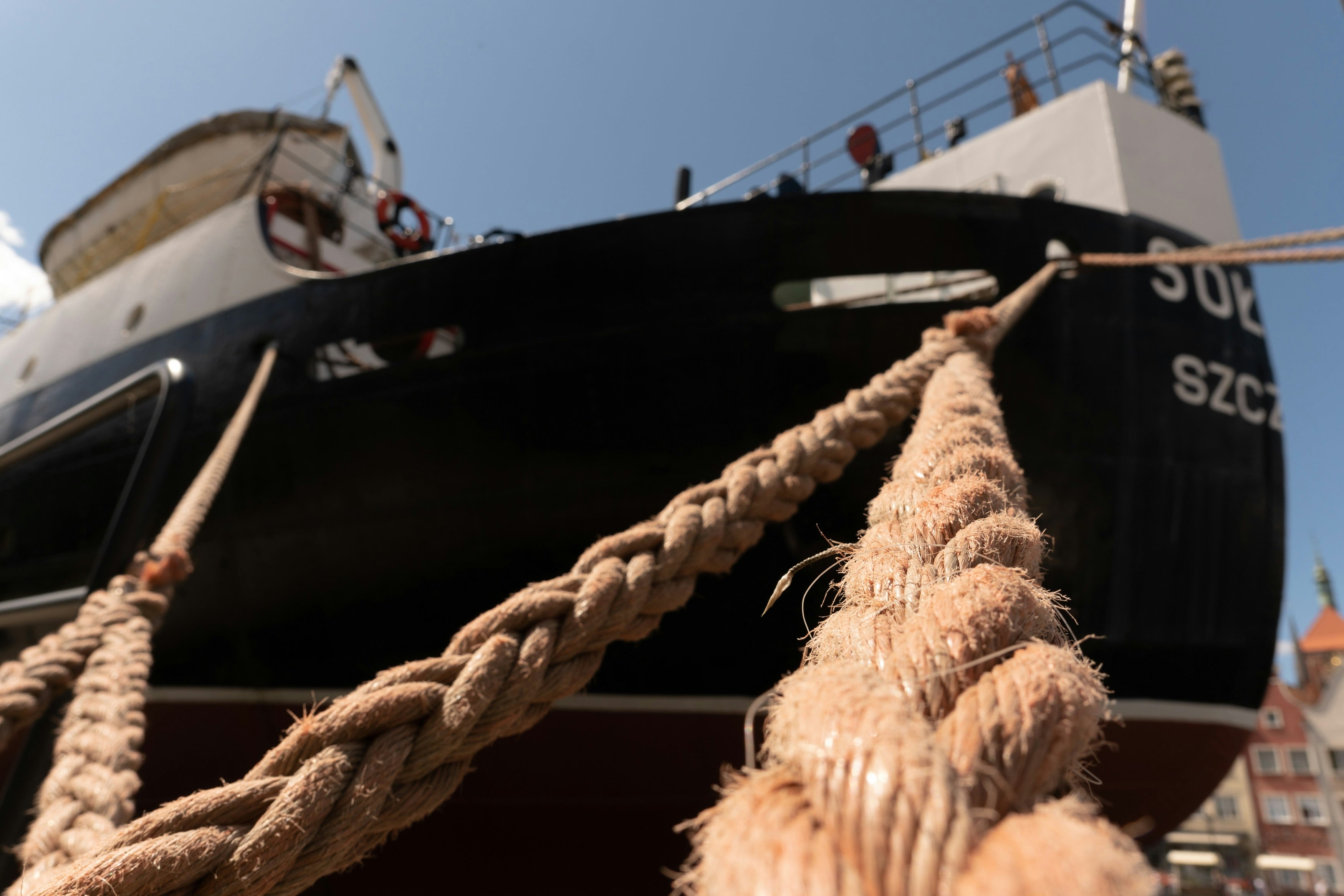
Docking is one of the most critical moments of any sea trip. Every year, ports and marinas are the scene of avoidable incidents that could have been prevented by better preparation and increased awareness of risks. Whether it's a finger stuck between a tight auger and a cleat, a fall into the water during a premature jump on the dock, or a collision with a pontoon due to lack of foresight, these accidents often share a common origin: the lack of method and communication. The mooring maneuver simultaneously involves piloting technique, crew coordination and the management of the external environment. It therefore naturally concentrates risk factors. However, with a structured approach and adapted actions, it is entirely possible to transform this stressful stage into a smooth and secure maneuver. This article takes you through the fundamental principles of safety during docking maneuvers, offering proven techniques and practical tips to protect your crew and your boat.
Why is safety during mooring maneuvers a major issue?
Approaching a wharf is undoubtedly one of the most delicate phases of navigation, where the slightest false movement can have serious consequences. Unlike sea navigation where space and time often make it possible to correct mistakes, mooring takes place in a constrained environment where there is little room for maneuver and numerous obstacles. Statistics from port authorities and maritime insurance companies reveal that the majority of personal accidents on board occur precisely during these port maneuvers.
The most frequent accidents involve fingers stuck between the pushers and the cleats, sometimes with irreversible consequences. Shocks against pontoons or other boats not only cause costly property damage, but can also throw crew members out and cause trauma. Falls into the water represent a particular danger, especially when they occur between the boat and the dock, creating a risk of being crushed. These incidents often occur in a context where stress builds up, instructions multiply without clarity, and where everyone acts in a disorderly manner.
The key to prevention lies in two essential pillars: methodical preparation and effective communication on board. Before even starting the approach, the crew must have been briefed on their respective roles, checked the required equipment, and established clear signals to coordinate actions. This prior organization radically transforms the dynamic of the maneuver, by replacing random improvisation with controlled choreography where everyone knows exactly what to do, when and how.
Understanding the risks associated with docking
Before being able to effectively guard against the dangers of mooring, it is essential to properly identify and understand the different types of risks that the crew will face. This knowledge makes it possible to adopt a preventive posture and to anticipate potentially dangerous situations.
Physical risks for the crew
The tensions exerted on the axles are the first source of physical danger during a mooring maneuver. An under tension can exert considerable force, much greater than what the appearance of the string suggests. When the boat pulls on an already fixed auger, whether under the effect of wind, current or simply the weight of the ship, this line becomes a real trap capable of cutting a finger in a fraction of a second if it gets stuck against a cleat or a fixed point. The violence of this force often comes as a surprise to inexperienced teammates who underestimate the power at play.
Pinch points are an omnipresent danger on a boat's deck during maneuvers. These are all the places where a part of the body can be crushed between two elements: between the anchor and the cleat, between the boat and the dock during a connection, between the fender that moves and the hull, or even between two boats that touch. These dangerous areas need to be identified mentally by each crew member, who will learn to always keep their hands, feet, and other body parts at a safe distance.
The risks of slipping and losing balance are exacerbated during mooring maneuvers for several reasons. The deck can be wet, crew members move quickly while handling cumbersome haulers, their attention is focused on the task at hand rather than on their stability, and the boat itself can move unpredictably due to the effects of elements or steering corrections. A fall on the bridge can cause trauma, but the danger becomes critical if it throws the person into the water, especially in the limited space between the boat and the dock.
Risks related to external conditions
Weather and environmental conditions add an additional dimension of complexity and danger to mooring maneuvers. Wind, current, and swell can act individually or in combination to significantly complicate the helmsman's job. A crosswind can push the boat against the dock with surprising force, making it difficult to control the approach and increasing the risk of a sudden collision. The current, often invisible until it shows its effects, can pull the boat in an unwanted direction, requiring constant corrections that complicate coordination with the crew. Swell, even moderate in a port, can cause the boat to move irregularly at the crucial moment when a crew member is trying to make a bull run.
Port traffic is an additional risk factor that is often overlooked. Other boats maneuver simultaneously, creating waves and taking up maneuvering space. Port shuttles, fishing boats and sailing boats that run out of steam generate disturbances that must be integrated into your approach. A boat that pops up unexpectedly can force it to change its trajectory quickly, creating a stressful situation where mistakes become more likely. You also have to deal with boats that are already moored, whose moorings can drag in the water and wind up around your propeller.
The lack of visibility and maneuvers at night amplify all the risks mentioned above. In the dark, it becomes difficult to accurately assess distances, see floating obstacles, identify water currents, and communicate visually with the crew. The usual landmarks disappear and the shadows create deceptive illusions. Crewmen on the bridge become less visible to the helmsman, increasing the risk of incidents. Modern surveillance systems, such as the Oria Marine IoT box, which can integrate alerts and facilitate communication on board even in conditions of reduced visibility, then become particularly valuable in maintaining an optimal level of safety.
Preparing the boat and crew before docking
The success of a secure mooring maneuver depends long before starting to approach the dock. This preparation phase, often overlooked by busy navigators, nevertheless constitutes the foundation on which all the safety of the operation is based.
Essential technical checks
The preparation of fences should be done well in advance, ideally before even entering the port. The number of fences required should be determined based on the type of mooring planned and the expected conditions. For mooring along a dock in crosswinds, more protection will be needed than for mooring in a catway in calm weather. The fenders must be inflated to the correct pressure, not too soft at the risk of being ineffective, nor too hard at the risk of bursting at the first impact. Their height positioning must be adjusted according to the height of the dock or pontoon, with particular attention paid to differences in level due to tides. An improperly positioned fender will not protect anything and will leave the shell vulnerable to impacts.
The exit and organization of the Aussières is a crucial step that will determine the fluidity of the maneuver. Each ausiere must be coiled properly, without knots or tendrils, ready to be deployed quickly without getting tangled. The ends must be accessible, ideally with a loop already prepared to facilitate passage around the docks or ramps. It is a good idea to prepare the axles in a logical order corresponding to the intended mooring sequence: usually the front peak, the rear guard, then the crosspieces. On larger boats, it may be appropriate to also prepare an easily accessible emergency boat. The organization of these lines on the bridge must prevent them from lying around in areas of passage where they could cause a crew member to trip up.
Checking the engine and thrusters before the final approach helps to avoid unpleasant surprises at the worst moment. It is important to ensure that the engine responds correctly to the commands, that the forward and reverse gears are activated without delay, and that the power is available instantly. On boats equipped with bow or stern thrusters, their operation should be tested well before the critical approach, by also checking the charge level of the batteries that power them. A thruster that shuts off during maneuver due to lack of battery can transform a controlled approach into an emergency situation. This technical check also reassures the helmsman about his means of action and allows him to plan his maneuver according to the tools actually available.
Distribution of roles on board
The crew briefing is arguably the most profitable time investment in terms of safety. This briefing should be done well in advance of the approach, in a quiet moment where everyone can ask questions and clarify misunderstandings. The skipper explains the type of maneuver planned, identifies the exact location where the boat should be positioned, describes the expected environmental conditions and their implications, and assigns a specific role to each crew member. It is essential that everyone understands not only their own task, but also the overall course of the maneuver, in order to be able to adapt if necessary and anticipate the needs of others.
Indication of no-go areas is a crucial part of the safety briefing. The skipper must explicitly prohibit placing one's hands or feet near the cleats when an ausiere is in tension, interposing between the boat and the dock, standing on the flatbeds or pulpit during the approach, and wrapping an auger around a part of the body to restrain it. These instructions may seem obvious to experienced sailors, but they are absolutely not so for novice teammates who, under the effect of stress and the desire to do well, spontaneously adopt dangerous behaviors. It's better to be explicit and slightly repetitive than to assume that everyone knows these basic rules.
Clear communication is based on the establishment of signals and instructions that are understood by everyone. In the noise of the port, with the engine running, the wind blowing and the distances that are getting longer, verbal communication becomes difficult. It is therefore wise to agree on simple visual signals: an arm raised to signal that you are ready, a horizontal gesture to indicate that you must stop, a rotating movement to ask to pass a bull. Verbal language must also be simplified and codified: rather than long sentences that get lost in the noise, we prefer short and precise words such as “ready”, “bullish”, “stop”, “stop”, “gently”. The crew should also know that in case of doubt or impending danger, anyone can shout “stop” and that the helmsman will stop immediately without asking questions.
Safe mooring techniques according to the type of maneuver
Each type of mooring has technical particularities that require a specific approach and adapted safety precautions. Mastering these different techniques allows you to calmly approach the varied situations you will encounter in ports.
Mooring along a wharf
The gradual approach is the fundamental principle of docking along a successful and secure dock. Instead of rushing to the intended location, the helmsman carries out a preliminary reconnaissance by slowly passing in front of the target square to assess its length, identify possible obstacles, observe the direction of the wind and current, and identify neighboring boats. This recognition also allows the crew to prepare mentally and finalize the final adjustments. The approach itself is then carried out at a very low speed, almost in slow motion, always maintaining the possibility of stopping quickly. It's always better to make two or three careful approaches than one quick attempt that ends up in a collision.
Managing speed and angles requires constant attention and the ability to anticipate the boat's reactions. The approach speed should be reduced enough to allow for a smooth stop, but maintained enough to maintain directional control, especially in the presence of wind or current. The angle of approach depends on the conditions: in calm winds, an approach almost parallel to the dock is possible, while with a crosswind that pushes towards the dock, it will be necessary to maintain a more open angle and use the motor to compensate for the drift. The moment of stopping should be calculated taking into account the inertia of the boat: a heavy sailboat will continue to move forward long after neutral, while a boat with a light motor will stop more quickly.
The placement of the first node follows a precise logic that determines the success of the entire maneuver. Typically, we start by passing the tip of the boat, that is to say the one that goes from the front of the boat to the front, because it stops the boat's advance and stabilizes the front. Then comes the rear guard, which goes from the back of the boat to the back and prevents the boat from backing up. These two moorings, called longitudinal axles, create a first level of safety. It is only once these two lines are in place and adjusted that we pass the crosspieces, which keep the boat at the right distance from the dock. This logical sequence allows the boat to be gradually controlled without ever leaving it completely free to move.
Catway mooring
The approach between the pontoons requires particular precision because the margins of error are reduced. The catway, this narrow alley lined with pontoons on each side, does not forgive approximations. The approach must be carried out along the axis, correctly evaluating the available width and taking into account the lateral drift that wind or current can create. The speed must be particularly reduced as any contact with the lateral pontoons immediately results in damage. The bow thruster, if available, becomes a valuable tool for staying on course in this confined space. It is essential to slow down early enough so as not to be forced to brake hard that could unbalance the crew or create a disruptive wave.
The safety of the person in charge of descending on the pontoon deserves special attention. This person will often have to step over the guardrail or stand on the gunwale by the time the boat comes close to the pontoon, creating an intrinsically dangerous situation. It is absolutely essential that she wait until the boat is completely stopped before attempting any maneuver. Wearing an automatic life jacket is highly recommended for this person, especially if the conditions are delicate or the light is low. Once on the pontoon, she must immediately secure a first anchor, generally the middle one, to prevent the boat from moving away, then assist in setting up the other moorings.
Techniques to avoid side impacts are based on the foresight and careful use of fenders. These should be positioned lower than for docking, as floating pontoons are generally lower than the boat's deck. More should also be placed along the length of the boat, as the entire hull may rub against the pontoon. The use of fender boards, these horizontal protections that are placed between the fenders and the hull, offers additional protection that is particularly useful in catways. The helmsman must constantly adjust his position to keep the boat centered in the space available, using the motor and thruster with short keys rather than with prolonged actions that would be more difficult to control.
Ankle mooring (stern-to)/Med-mooring
The precise positioning of the mooring in the ass, typical of the Mediterranean, requires a particular technique since the boat must back up perpendicular to the dock while letting its anchor fall forward. This maneuver begins well before the dock, when the boat anchors its anchor at a distance calculated for the chain to be long enough. The calculation of this distance depends on the depth of the water, the length of the boat and the quantity of chain available. Once the anchor is wet, the boat slowly backs up to the dock, spinning the chain gradually, while maintaining a slight tension to ensure that the anchor grips the bottom well and does not dredge.
Managing the anchor during this maneuver requires close coordination between the person at the front who controls the windlass and the helmsman who maneuvers in reverse. The person at the front should communicate the quantity of chain spun regularly and report any problems, such as a dredged anchor or a tangled chain. The helmsman, on the other hand, must keep the boat in line with its location while backing up at a very low speed, which is particularly tricky because maneuverability in reverse is limited. Wind and current exert a considerable influence during this phase, and it is sometimes necessary to correct the trajectory significantly. The reduced visibility to the rear further complicates the task, making it essential to have teammates at the back who guide the helmsman.
Coordination between helm and crew reaches its maximum level of requirement during a mooring in the ass. While the helmsman manages the reverse gear and tries to stay on course despite the elements, one person at the front controls the windlass, one or two people at the back prepare to moorings on the dock, and possibly another person comes down with the dinghy to retrieve the haulers and attach them to the dock rings. Everyone must know their precise role and the timing of their interventions. Communication becomes crucial: clear signals tell the helmsman how far away is left to the dock, when to correct to port or starboard, and when to stop. This complex choreography requires training and mutual trust among the crew.
Good safety practices during maneuvering
Beyond pure technique, it is the elementary safety actions, repeated systematically, that make the difference between a crew exposed to accidents and a crew that navigates peacefully. These best practices must become automatic.
Managing Aussies Safely
Never wrap a bull around your arm or leg is an absolute rule of safety at sea with no exceptions. Under the effect of a sudden pull, caused for example by a gust of wind that pushes the boat or by a wave that pulls it, a bull wrapped around a limb can tighten instantly like a tourniquet, causing serious injuries ranging from deep cuts to outright pulling. This dangerous practice is however tempting when trying to restrain a boat that is moving away from the dock, because it gives the illusion of better control. In reality, no human being has the strength to hold back a multi-ton boat subjected to the elements. The only safe method is to pass the bull around a cleat on the boat and use this fixed point to control the tension, allowing the bull to spin gradually if necessary.
Keeping your fingers away from the cleats while a bull is in tension requires constant vigilance. The danger arises particularly when the finger is turned around the cleat to secure it, an operation during which the fingers are necessarily close to the pinch point. The safe technique is to keep a relaxed portion of the bull in your hands and on the heel, working within this margin of safety rather than drawing the bull to the maximum of her tension. You also need to learn to anticipate jolts: if you see an approaching wave that is going to lift the boat, or if you feel the boat pulling sharply downwards, remove your hands from the danger zone immediately. With experience, this foresight becomes intuitive.
Using the voice and avoiding sudden gestures facilitates effective communication that is not limited to the words spoken but also includes how they are spoken. A calm and calm voice helps maintain a serene atmosphere on board, even when the situation gets tense. Conversely, yelling or reproaching creates stress, interferes with concentration, and increases the risk of mistakes. Instructions should be given clearly, one at a time, giving the person time to execute before giving the next instruction. Movements must be measured and predictable: a crew member who moves abruptly across the bridge can unbalance the boat at a critical moment or surprise the helmsman. Fluidity and calm are the best allies of security.
Skipper safety
Anticipating the boat's reactions is the essence of safe steering during mooring maneuvers. An experienced skipper does not just react to what is happening, he mentally plans the next two or three seconds to predict how the boat will respond to his commands and how the elements will affect it. This foresight includes understanding the inertia of the boat, which continues to move forward even after neutral, taking into account the time between an action at the helm and the effect produced, and constantly evaluating the influence of wind and current. The skipper must also anticipate possible mistakes and have mentally prepared his plans B and C: what to do if the bull did not make it on time, how to react if another boat arises, how to get out of the situation if the maneuver goes wrong.
Respecting distances is a fundamental safety principle that applies at several levels. Distance from neighboring boats, always maintaining a sufficient margin so that the fences can play their protective role even in the event of contact. Distance from the dock, avoiding approaching too close too quickly and maintaining the possibility of correcting the trajectory. Safety distance from other users of the port: boats maneuvering, tenders that circulate, possible swimmers. These safety distances are not optional luxuries but essential margins of error that transform a potential incident into a simple, easily manageable uncomfortable situation.
The constant monitoring of the environment requires the skipper to maintain a global vision of the situation despite the natural focus on the maneuver in progress. He should regularly scan the entire space around the boat, check that nothing has changed since the last observation, monitor the crew to make sure no one is in danger, and stay alert to signals or warnings from other boats. This monitoring also extends to technical parameters: oil pressure gauges, engine temperature, battery level for thrusters. Modern tools such as the Oria Marine IoT box can assist in this monitoring by centralizing important information and alerting the skipper of anomalies, allowing him to focus more on the maneuver itself.
Avoid risky behavior
Not jumping on the pier seems to be an obvious instruction, and yet this dangerous behavior remains surprisingly common, even among experienced navigators. The impulse to jump often occurs when the boat moves slightly away from the dock and you want to avoid missing the opportunity to make a bull run. The danger is twofold: on the one hand, the person can miss the jump and fall between the boat and the dock, creating a critical emergency situation where they risk crashing, and on the other hand, even if the jump succeeds, the impulse given can push the boat further away from the dock, making the situation worse. The only safe approach is to wait patiently for the boat to be close and stable enough, even if necessary, to make a new approach.
Not pulling your arms around a tense bully is a matter of understanding the forces at play. When a multi-ton boat is pushed by the wind or pulled by the current, the forces exerted on the haulers greatly exceed human capabilities. Attempting to restrain or pull a boat under these conditions is useless except to expose yourself to a muscle injury, a hernia, or worse, to have your hands pulled from your hands which can cause serious burns due to friction. The correct technique is to use cleats and winches as mechanical support points, letting these pieces of equipment multiply strength rather than relying on muscular strength alone. Understanding and accepting your physical limits is not a weakness but a sign of nautical intelligence.
Wearing non-slip gloves and shoes is a minimal investment for a considerable gain in safety. The gloves protect hands from friction burns caused by fast-spinning austers, improve grip on wet or slippery ropes, and provide protection against splinters on wooden pontoons. It is advisable to choose gloves specifically designed for navigation, with a good grip even when wet and thin enough to maintain the dexterity necessary for handling knots. Non-slip shoes, with soles adapted to wet surfaces and good ankle support, drastically reduce the risk of slipping when moving on deck during maneuvers. This simple equipment should be worn systematically from the start of the approach to the port.
After docking: securing the boat and the environment
The mooring maneuver does not end when the boat touches the dock. The post-docking phase, often overlooked by crews relieved to have successfully completed the approach, remains crucial to ensure the safety of the boat and its crew for the hours or days to come.
Checking the tension of the aussers
The adjustment according to the weather must be made taking into account not only the current conditions, but especially the expected evolution. If a gust of wind is forecast, the harrows must be numerous and properly stretched to prevent the boat from pounding against the dock, but not so numerous as to risk breaking due to jolts. In tidal areas, the difference in water level between high tide and low tide can be considerable, requiring adjustment of the length of the moors or the use of long hauls that allow the boat to rise and fall with the water level. It is recommended that you check and adjust the axles several times after initial docking, as they tend to relax slightly once the last tensions have worn off.
The positioning of the fenders after docking also deserves careful checking. They may have moved during the maneuver, ending up too high or too low, or concentrating on one part of the hull leaving other vulnerable areas. It is important to ensure that they are well distributed over the length of the boat, positioned at the right height to protect the contact area between the hull and the dock or pontoon, and sufficiently inflated to perform their protective function. In windy conditions, it may be a good idea to add additional fenders or to place a fender board to distribute the protection. The fender moorings themselves should be checked to ensure that they are not likely to come undone.
Final safety check
Closing boat systems properly is part of a post-docking safety checklist that should never be overlooked. The engine must be switched off according to the appropriate procedure, the hull valves closed if the boat remains moored for several days, the batteries either disconnected or put into charge maintenance mode, the gas shut off at the bottle, and all non-essential electrical circuits switched off. The docked boat remains exposed to the risks of fire, water invasion following a leak, or complete battery discharge, and these systematic checks minimize these risks. A final turn of the boat to ensure that all openings are properly closed or secured according to weather conditions completes this check.
Safe traffic around the boat concerns both the crew and other users of the port. The mowers should be arranged in such a way as not to create traps for people walking on the platform, ideally by guiding them so that they remain low to the ground or clearly visible. If the boat is docked in a catway, it must be ensured that sufficient passage remains available on the pontoon so that the owners of neighboring boats can access their vessels. Fenders should not hang in the water where they could get stuck under another boat or get wrapped around a propeller. The gangway, if used, must be stable and secure, with guardrails if possible, and positioned so as not to tip over with the movements of the boat due to the waves.
Additional tips for safe browsing
Beyond the techniques and procedures specific to maneuvers, certain general elements contribute to raising the overall level of safety of your navigations.
Recommended equipment
Walkie-talkies for larger crews or for large boats radically transform the quality of communication during maneuvers. On a tall ship or a catamaran, the distance between the cockpit and the front can make verbal communication difficult, especially with engine and wind noise. Maritime walkie-talkies allow clear and instant exchanges between the helmsman and the crew members positioned at different points on the boat. It is important to choose waterproof models, with good battery life, and to agree on a communication protocol in advance to avoid having everyone talking at the same time. This equipment is particularly valuable during moorings in the ass where the person at the front who manages the anchor must communicate regularly with the helmsman who backs up.
Automatic vests in difficult conditions should not be considered exceptional equipment but as standard protection during delicate maneuvers. Unlike traditional vests that require manual inflation, automatic vests are activated upon contact with water, offering immediate protection even if the person is unconscious or helpless after a fall. They are especially recommended for people who need to stand on the shore, step over the guardrail, or go down onto a pontoon before the boat is completely stabilized. Conditions that justify the systematic wearing of an automatic vest include strong wind, swell in the harbor, night maneuvers, and any situation where the crew is small or inexperienced.
Anti-abrasion gloves specially designed for navigation offer a higher level of protection than regular work gloves. They combine a reinforced palm resistant to abrasion caused by haulers, fingers thin enough to allow rope handling and knotting, and often joint reinforcements to protect against impacts. Some recent models also incorporate technical materials that maintain a good grip even when wet. It is a good idea to have several pairs on board, of different sizes to adapt to different crew members, and to renew them regularly because their effectiveness decreases with wear and tear.
Training and training
The importance of repeating maneuvers cannot be overstated. Like any complex physical skill, docking improves dramatically with regular practice. It is strongly recommended to take advantage of outings during off-peak periods, when the port is less busy and the pressure is lower, to practice the different types of maneuvers. This repetition creates automations that will allow the crew to react correctly even under stress or in an emergency situation. It also builds mutual trust among the crew and makes it possible to identify and correct bad habits before they cause an incident. Beginning mariners should consider each docking as a learning opportunity and take the time afterwards to analyze what worked well and what could be improved.
Examples of exercises to practice include mooring along a dock at different angles of approach and with different simulated wind conditions by choosing locations that are exposed differently. You can also practice emergency maneuvers such as stopping the boat abruptly, leaving a dock in a hurry if the boats are entangled, or recovering a crew member who has fallen into the water while docking. It is also a good idea to mooring at night in a controlled environment, for example by returning to port after a dusk trip, to become familiar with the specific difficulties of night-time navigation. Sailing schools and some nautical clubs also offer courses specifically dedicated to port maneuvers, which can represent an excellent investment for sailors wishing to make rapid progress.
FAQ: Common questions about safety during mooring maneuvers
How to avoid accidents when handling aussers?
The prevention of accidents associated with pushers is based on strict compliance with a few fundamental rules. First, never wrap a bull around any part of the body, regardless of the situation. Second, always keep your fingers away from pinch points, especially cleats when an auder is under tension. Thirdly, use the fixed points of the boat (cleats, winches) to control the hauls rather than relying on muscular strength alone. Finally, always wear suitable gloves that protect against friction burns and improve grip. Vigilance and the expectation of risky moments, such as when a wave will create sudden tension, allow you to remove your hands from dangerous areas in time.
What is the best way to brief your crew before a maneuver?
An effective briefing starts with a clear explanation of the type of maneuver being planned and the exact location intended for. The skipper then describes the environmental conditions (wind, current, traffic) and their implications on the maneuver. Each crew member is assigned a specific role with specific instructions, and the general timing of the maneuver is explained so that everyone understands when to intervene. Dangerous areas and prohibited behaviors are clearly identified. The briefing also includes establishing simple communication signals and confirming that everyone understood by inviting questions. This briefing should take place in a quiet moment, well before the final approach, to allow for the necessary clarifications.
What common mistakes cause the majority of dockside incidents?
Dockside incident statistics show that most are the result of a limited number of recurring errors. Approaching the dock too quickly, often due to overconfidence or a poor assessment of the boat's inertia, comes out on top and causes collisions and injuries. The positioning of the hands and fingers near the cleats when the Aussiers suddenly tense up causes numerous serious injuries. Jumping prematurely onto the dock before the boat is stabilized regularly causes falls into the water. The lack of prior briefing leads to confusion, conflicting instructions, and poor coordination. Finally, the attempt to restrain a boat by arm strength alone rather than using the appropriate mechanical equipment leads to muscular injuries and situations where the boat is completely out of control.
Do you have to wear a life jacket when mooring?
Wearing a life jacket when mooring is generally not legally mandatory, but it is strongly recommended in certain circumstances. Crew members who must stand on the shore, step over the guardrail, or get off the dock before the boat is fully stabilized should always wear an automatic vest. This recommendation is particularly applicable in difficult weather conditions (strong wind, swell), during night maneuvers where a fall would be more difficult to spot, for inexperienced crew members who are less stable on a moving boat, and when the crew is reduced because emergency services would take longer to be organized. Modern automatic vests are discreet and comfortable enough that wearing them does not cause significant discomfort.
How to manage a mooring in high wind conditions?
Mooring in strong winds requires increased preparation and adaptation of the standard technique. Recognizing the location beforehand becomes crucial to assess how the wind will affect the boat in that specific position. The number of fenders must be increased and their positioning anticipated according to the part of the boat that will be pushed against the dock. The approach should be carried out taking into account the effect of the wind, often maintaining a more open angle than usual and constantly compensating for the drift. It may be a good idea to pass more haulers than usual and to secure them more quickly to limit boat movements. In some very strong wind situations, it may be better to give up some exposed locations and look for an alternative that is better protected, even if it is less practical.
What to do if you miss your approach maneuver?
To miss an approach maneuver is neither a shame nor a disaster, and the ability to accept it and start again calmly distinguishes careful navigators from hotheads. As soon as you realize that the approach is not going as planned, that the boat is poorly positioned, that it is going too fast, or that the conditions have changed, the best decision is to stop the maneuver immediately. Switch on the gas to safely get away from the dock and nearby boats, do another round to reposition yourself, take the time to analyze what went wrong and how to fix it, and start a new approach with the necessary adjustments. This iterative approach is infinitely preferable to the stubbornness that turns a failed approach into a costly and potentially dangerous collision. A confident and well-trained crew does not panic when faced with a failed docking and knows that it is always better to start over properly.
How do you learn to communicate better on board during maneuvers?
Improving communication on board starts with the establishment of clear and repeated protocols. Define a standard vocabulary for maneuvers, with short, unambiguous words for frequent commands. Practice these protocols during outings in calm conditions so that they become automatic in stressful situations. Encourage a culture where everyone can report danger or ask for clarification without fear of judgment. The helmsman must develop the habit of verbalizing his intentions before acting so that the crew can anticipate the boat's movements. After each maneuver, take a few minutes to debrief on what worked well in terms of communication and what could be improved. For larger boats, investing in maritime walkie-talkies can transform the quality of exchanges during complex maneuvers.
Conclusion
Safety during mooring maneuvers is no accident but results from rigorous, methodical and systematic preparation. Every sea trip should include, before even starting the approach to the port on return, a preparation phase where the equipment is checked, the roles distributed, and the safety instructions recalled. This discipline, which may seem restrictive to hurried sailors, is in fact the best possible investment to transform mooring maneuvers from stressful moments into smooth and controlled operations.
The essential actions that guarantee safety during these maneuvers can be summed up in a few fundamental principles: never wrap an auger around a part of the body, keep your fingers away from pinch points, approach the dock at a reduced speed, communicate clearly with the crew, communicate clearly with the crew, wear appropriate protective equipment, and never hesitate to repeat a maneuver if it does not go as planned. These principles, simple in appearance, require constant vigilance and become automatic only with repeated practice.
The boating safety equation is based on three inseparable pillars: foresight that makes it possible to anticipate difficulties and prepare solutions, communication that ensures fluid coordination between all crew members, and technique that provides the tools to effectively execute manoeuvres. None of these three elements can make up for the absence of the other two. Modern mariners can also benefit from technological advances, such as embedded surveillance systems such as the Oria Marine IoT box, which facilitate boat management and on-board communication, allowing greater focus on the human and technical aspects of safety. Excellence in mooring maneuvers is not achieved in a day, but each well-prepared trip and each conscientious mooring are additional steps towards control and serenity on the water.


